Poultry Guard® Litter Amendment & Ammonia Control Services
Versatile Litter Amendments for Stronger Flock Performance
Poultry Guard® by C&S Ag Services is a versatile litter amendment designed to lower litter pH, reduce ammonia emissions, and improve overall house conditions in poultry operations. Backed by research and field performance, Poultry Guard helps support better footpad quality, bird health, and production outcomes.
Available in both dry and liquid applications, Poultry Guard fits seamlessly into your operation with flexible treatment options and full-service support from the C&S Ag Services team.
Our Service Areas
Available in Dry & Liquid
Flexible treatment formats designed to fit your operation — same proven chemistry, different delivery.
Dry Application
Poultry Guard® Dry by C&S Ag Services
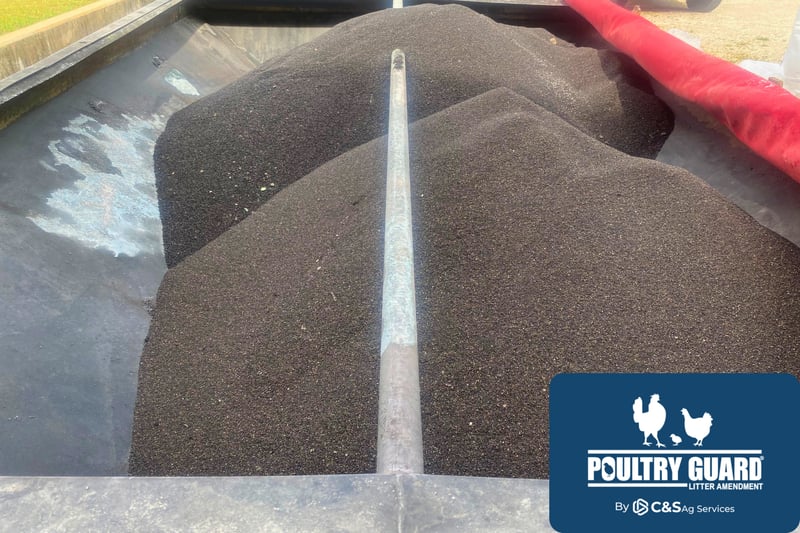
A proven dry litter amendment that works quickly to reduce ammonia, lower pH, and improve litter conditions for stronger flock performance.
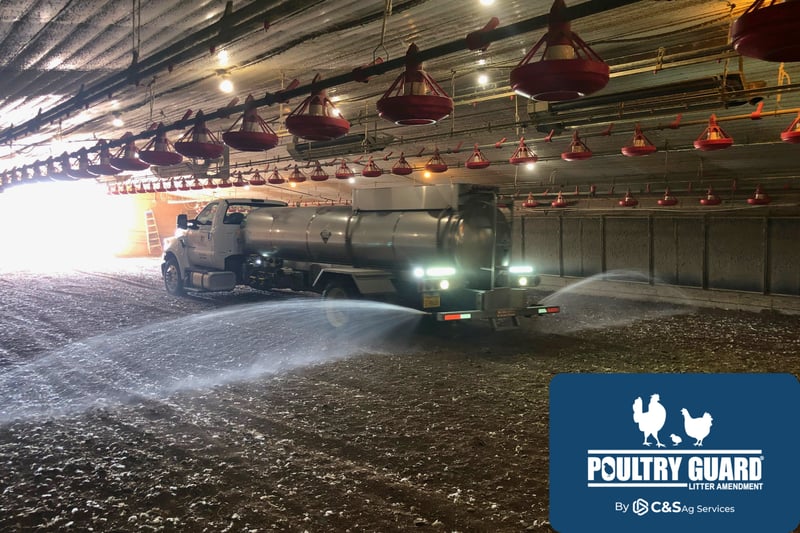
A liquid application option that delivers consistent coverage and effective ammonia control. Ideal for operations looking for efficient, large-scale treatment.
Explore the Latest Research with Poultry Guard Dry®
A 42-day study evaluated Poultry Guard® Dry across multiple application timings, including midflock application, while measuring bird health and performance.
What is ammonia and how does it impact poultry houses?
Ammonia (NH₃) is a gas produced as nitrogen-containing compounds in poultry litter break down. Ammonia can accumulate within the litter and be released into the air. Increased temperature, moisture and pH can increase ammonia release.
Elevated ammonia levels can negatively affect bird respiratory health and may impact flock performance through reduced weight gain and feed efficiency. Excess litter moisture can also contribute to increased footpad lesion scores.
Poultry Guard® Dry by C&S Ag Services is an acidified clay litter amendment designed to control ammonia and manage litter moisture in poultry houses. By lowering litter pH, Poultry Guard Dry helps reduce ammonia while its absorbent properties help manage moisture and support improved paw scores. It is professionally applied 2–24 hours before bird placement.
What is Poultry Guard® Liquid?
Poultry Guard® Liquid by C&S Ag Services is an acidified aluminum sulfate litter amendment designed to lower litter pH and control ammonia in poultry houses. Its formulation begins working immediately and continues generating the hydrogen ions needed for extended ammonia control. Poultry Guard Liquid is professionally applied 2–4 days before bird placement.
Is Poultry Guard® safe to use in poultry houses?
Poultry Guard® products are applied by trained, professional applicators who follow established handling and application procedures to ensure safe application and a safe environment for birds! As with any litter amendment, proper handling and application are important. Professional application helps ensure Poultry Guard is used appropriately and effectively in poultry houses.
Can Poultry Guard® Dry improve footpad lesion scores?
Poultry Guard® Dry is an acidified clay with unique properties that help control ammonia in poultry houses and absorb litter moisture, therefore it can reduce paw lesions. Peer-reviewed published research has shown reduced paw lesion scores with Poultry Guard Dry.
How do Poultry Guard® Litter Amendments impact pH?
The strength of an acid is measured by its pKa value, with a lower pKa indicating a stronger acid. Poultry Guard® Dry contains bentonite clay acidified with sulfuric acid, while Poultry Guard® Liquid contains aluminum sulfate acidified with sulfuric acid. Sulfuric acid has a pKa of -3.0, compared with a pKa of 1.92 for sodium bisulfate, an acidifying ingredient used in other litter amendments.An acid with a lower pKa acts faster, producing a lower pH.
Can Poultry Guard® Dry be applied with birds present?
Research supports that Poultry Guard® Dry can be applied during midflock. A 2026 controlled pen trial evaluated Poultry Guard® Dry when applied midflock with birds present. In the study, Poultry Guard Dry was applied over birds on day 12 at 100 lbs./1,000 sq. ft. Researchers observed no negative impact on bird performance, no reported skin burns, and no abnormalities during organ examination after the study.
Research supports that Poultry Guard® Dry can be applied over feed. A 2026 controlled pen trial evaluated Poultry Guard® Dry when applied over litter and feed before bird placement and midflock. In the study, Poultry Guard Dry was applied at 100 lbs./1,000 sq. ft. Researchers observed no negative impact on bird performance and no abnormalities during organ examination after the study.
Do Poultry Guard® litter amendments increase nitrogen value in litter?
Yes. Poultry Guard® litter amendments help retain nitrogen in the litter by converting ammonia into ammonium sulfate, a common fertilizer. This process helps reduce ammonia loss from the poultry house while increasing the nitrogen value of the litter for land application.
Does Poultry Guard® Dry contain trace elements?
Poultry Guard® Dry is made with naturally occurring bentonite clay, which, like soils and other natural materials, can contain trace heavy metals. The clay used in Poultry Guard Dry meets applicable health and safety regulations for trace metals, including arsenic, cadmium, mercury and lead that occur naturally. The clay is also considered Generally Recognized as Safe (GRAS) by the FDA.
Want to learn more? Learn more about metals, trace elements and what they mean for Poultry Guard Dry here.
Does Poultry Guard® Dry create an exothermic reaction?
Yes, that means its working! An exothermic reaction means that heat is produced during a chemical reaction. When Poultry Guard® Dry interacts with poultry litter, normal chemical reactions generate a manageable amount of heat as the product begins working.
Exothermic reactions are common and occur in familiar processes ranging from hand warmers to bread dough rising.
.webp "Baby chickens")